Best Travel Expense Tracking Apps to Manage Your Spending Abroad Smartly
Keep your travel budget on track with the best expense tracking apps for international trips. Compare features, fees, and find the right tool for your journey.
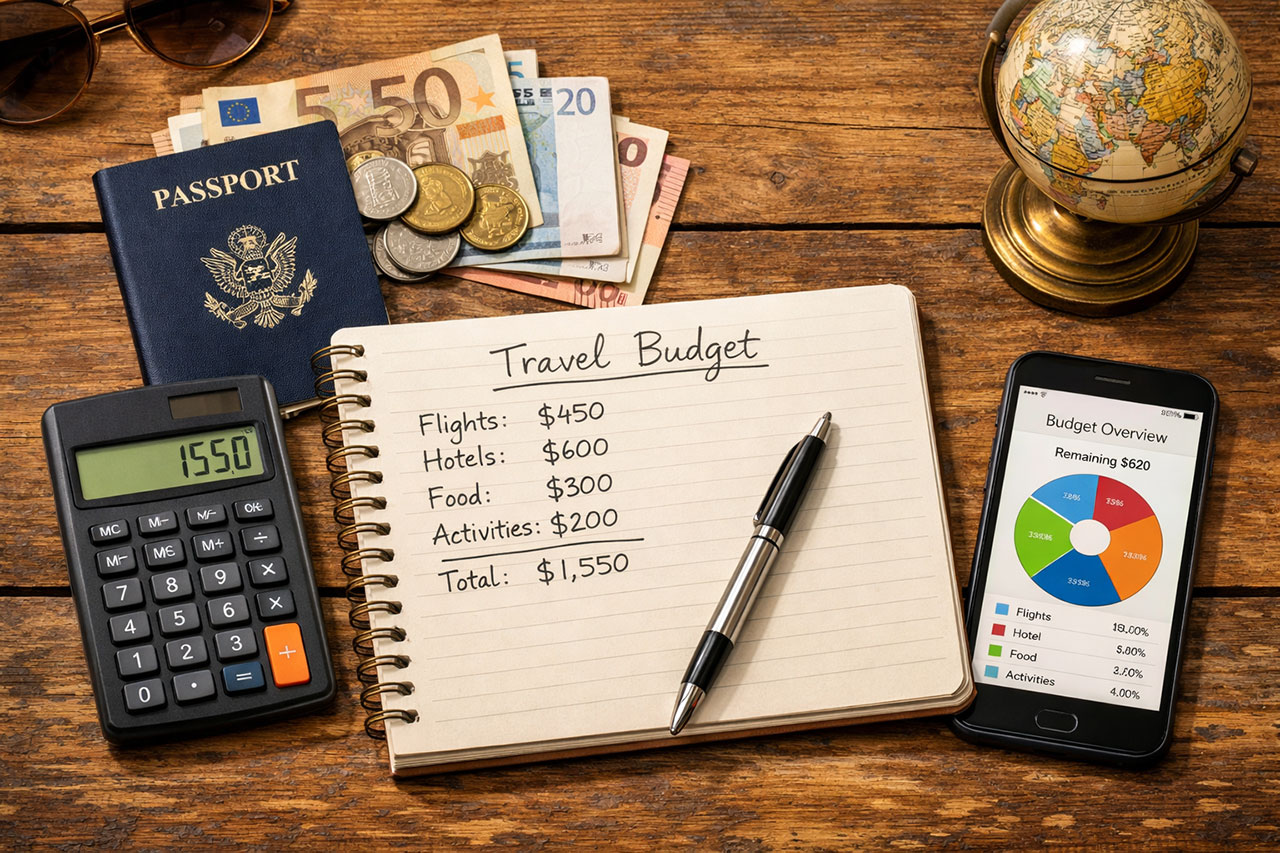
Why Tracking Travel Expenses Matters More Than You Think
Most travellers set a budget before they leave home. Far fewer actually track what they spend while they are away. The result is a familiar story: you return from a two-week holiday convinced you stayed within budget, only to discover your credit card statement tells a very different tale.
Overspending abroad is easy. Currency conversions blur the true cost of purchases, small daily expenses accumulate invisibly, and the holiday mindset makes it tempting to justify every splurge. A dedicated travel expense tracking app cuts through this fog, giving you a real-time picture of where your money is going so you can make informed decisions before your budget runs dry.
Use our [currency converter](/currency) to plan your budget and understand the true cost of your spending in your home currency before you travel.
The Best Travel Expense Tracking Apps in 2026
Trail Wallet
Trail Wallet is one of the most intuitive budget tracking apps designed specifically for travellers. You set a daily or total trip budget, then log each expense as you go. The app displays a simple visual indicator showing how much of your budget remains, making it immediately clear whether you are on track or overspending.
Key features:
Trail Wallet is ideal for travellers who want simplicity over complexity — no bank integration, no automatic syncing, just a clean manual log that keeps you honest.
Splitwise
Splitwise is the go-to app for group travellers who need to track shared expenses and settle up fairly. When travelling with friends or family, it is easy for one person to pay for accommodation while another covers meals and a third handles transport. Splitwise records every shared expense and calculates exactly who owes what at the end of the trip.
Key features:
For group trips, Splitwise eliminates the awkward money conversations and ensures everyone pays their fair share without anyone keeping a running tally in their head.
Revolut
Revolut is more than an expense tracker — it is a full multi-currency financial account that also provides detailed spending analytics. When you pay with your Revolut card abroad, every transaction is automatically categorised and logged in the app. You can set spending limits by category, receive instant notifications for every payment, and see a breakdown of your spending by merchant type.
Key features:
Revolut's combination of a zero-fee travel card and built-in expense tracking makes it one of the most powerful tools available to international travellers.
Trabee Pocket
Trabee Pocket is a dedicated travel expense diary that goes beyond simple tracking to help you reflect on your spending patterns. You can attach photos to expenses, add notes, and create a visual travel journal alongside your financial records.
Key features:
Trabee Pocket suits travellers who want to combine financial tracking with a personal travel diary, creating a record of both what they spent and what they experienced.
How to Set Up an Effective Travel Budget
The 50/30/20 Travel Budget Framework
Before you can track expenses effectively, you need a realistic budget to track against. A simple framework divides your daily travel budget into three categories:
This framework prevents the common mistake of spending too heavily on accommodation and leaving nothing for the experiences that make travel memorable.
Setting Daily Spending Limits
Rather than tracking a single total budget, break your budget into daily allowances. This makes overspending immediately visible — if you blow your daily limit on day three, you know you need to compensate on day four rather than discovering the problem at the end of the trip.
Most expense tracking apps support daily budget limits, and some will send you a notification when you approach or exceed your daily threshold.
Browse more articles on our [blog](/blog) for more tips on managing your money while travelling internationally.
Common Expense Tracking Mistakes to Avoid
Forgetting Small Purchases
The biggest tracking error is ignoring small expenses — a coffee here, a bottle of water there, a local bus ticket. These micro-purchases feel insignificant individually but can add up to a substantial sum over a two-week trip. Log every purchase, no matter how small.
Not Accounting for Currency Fluctuations
If you are travelling across multiple countries with different currencies, exchange rates will shift during your trip. Most tracking apps handle this automatically, but if you are using a manual spreadsheet, update your exchange rates every few days to maintain accuracy.
Ignoring Pre-Paid Expenses
Many travellers forget to include pre-paid costs — flights, accommodation deposits, travel insurance, and pre-booked tours — in their overall budget tracking. These costs are real even if they were paid before departure, and excluding them gives a false picture of your total trip cost.
Waiting Until the End of the Day
The most effective expense tracking happens in real time, immediately after each purchase. Waiting until the end of the day means relying on memory, which is unreliable — especially after a full day of sightseeing and a glass or two of local wine with dinner.
Making the Most of Your Expense Data
The real value of travel expense tracking is not just staying within budget on a single trip — it is building a database of your actual spending patterns that makes future trips easier to plan. After your trip, review your expense data to understand:
This data transforms your next budget from a guess into an informed estimate based on your own real-world spending history.