Marrakech Travel Guide: Souks, Riads, and Sahara Desert Adventures
Discover the magic of Marrakech — from labyrinthine souks and ornate riads to the golden dunes of the Sahara just a day trip away.
# Marrakech Travel Guide: Souks, Riads, and Sahara Desert Adventures
Marrakech is one of the world's most captivating cities — a sensory feast of colour, scent, sound, and flavour that leaves every visitor transformed. Nestled at the foot of the Atlas Mountains in Morocco, this ancient imperial city blends medieval medina life with a thriving modern arts scene. Whether you're wandering through centuries-old souks, sleeping in a candlelit riad, or venturing out to the Sahara Desert, Marrakech delivers experiences that are genuinely unlike anywhere else on earth.
Exploring the Medina: The Heart of Marrakech
The medina of Marrakech is a UNESCO World Heritage Site and the city's beating heart. Its narrow, winding alleyways — known as *derbs* — lead you through a maze of workshops, mosques, hammams, and market stalls that have operated for centuries.
Jemaa el-Fna Square
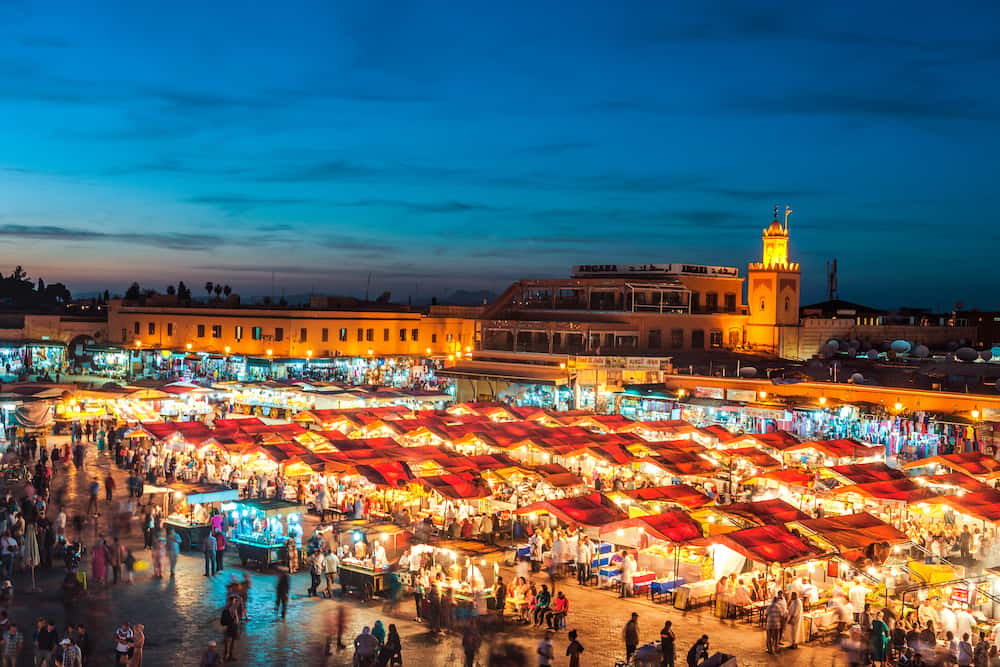
No visit to Marrakech is complete without spending time at Jemaa el-Fna, the city's main square and a UNESCO Intangible Cultural Heritage site. By day, it's filled with orange juice vendors, henna artists, and snake charmers. As evening falls, the square transforms into an open-air theatre with storytellers, musicians, and dozens of food stalls serving everything from harira soup to grilled meats.
The Souks
Beyond the square, the souks stretch for kilometres in every direction, each quarter specialising in a different craft. The Souk des Teinturiers (Dyers' Souk) is one of the most photogenic, where leather and wool are dyed in vivid terracotta pots. The Souk Semmarine is the main artery for textiles, lanterns, and ceramics.
Shopping tips for the souks:
Use our [currency converter](/currency) to plan your budget and check the latest dirham exchange rates before you go.
Riads: Staying in Marrakech's Hidden Palaces
One of the greatest pleasures of visiting Marrakech is staying in a riad — a traditional Moroccan house built around a central courtyard garden. From the outside, riads appear as plain walls with a simple wooden door. Step inside, however, and you're transported into a world of intricate tilework, carved plasterwork, fragrant orange trees, and tinkling fountains.
Choosing the Right Riad
Marrakech has hundreds of riads ranging from budget guesthouses to ultra-luxury boutique hotels. Here's how to choose:
What to Expect
Most riads include a traditional Moroccan breakfast of msemen flatbreads, amlou (almond and argan oil dip), fresh-squeezed orange juice, and mint tea. Many also offer hammam treatments — a steam bath and exfoliation ritual that is an essential Moroccan wellness experience.
Check live weather on our [city dashboard](/) to plan the best time for your rooftop breakfast or evening terrace dining.
Day Trips from Marrakech
Marrakech's location makes it an ideal base for some of Morocco's most spectacular landscapes.
The Atlas Mountains
Just 60 kilometres from the city, the High Atlas Mountains offer dramatic scenery, Berber villages, and excellent hiking. The Ourika Valley is the most accessible day trip, with a river gorge, waterfalls, and traditional markets. For more serious trekkers, Toubkal National Park is home to North Africa's highest peak at 4,167 metres.
Ait Benhaddou
This ancient fortified village — a UNESCO World Heritage Site and famous film location — sits about 3 hours from Marrakech. Its towering earthen kasbahs rising from the desert floor are breathtaking, and the village has been used as a backdrop for numerous international films and television productions.
The Sahara Desert
For the ultimate Moroccan adventure, a 2–3 day trip to the Sahara via Merzouga or Zagora is unforgettable. Ride camels into the dunes at sunset, sleep in a luxury desert camp under a canopy of stars, and wake to a sunrise over the golden erg. Most tours depart from Marrakech and include stops at the Draa Valley, rose-growing villages, and dramatic gorges along the way.
Marrakech Food Guide: What to Eat and Where
Moroccan cuisine is one of the world's great culinary traditions, and Marrakech is the perfect place to explore it.
Must-Try Dishes
Where to Eat
For the most authentic experience, eat where locals eat. The food stalls at Jemaa el-Fna are excellent value and great fun. For a more refined dining experience, many riads offer set menus featuring traditional Moroccan recipes prepared with market-fresh ingredients.
Browse more articles on our [blog](/blog) for food guides and culinary travel tips from around the world.
Practical Travel Tips for Marrakech
Getting there: Marrakech Menara Airport receives direct flights from many European cities. The airport is just 6 kilometres from the medina.
Getting around: The medina is best explored on foot. Petit taxis (small orange cabs) are affordable for longer journeys; always agree on a price before getting in or insist on the meter.
Best time to visit: Spring (March–May) and autumn (September–November) offer the most pleasant temperatures. Summer can be extremely hot, while winter nights can be surprisingly cold.
Dress code: Marrakech is a conservative city. Dress modestly when visiting mosques and the medina — cover shoulders and knees. Swimwear is fine at riad pools and resort areas.
Safety: Marrakech is generally safe for tourists. Be aware of unofficial guides who may approach you in the medina — politely decline and navigate with a good map or GPS.
Marrakech rewards the curious traveller with layers of history, culture, and beauty that reveal themselves slowly. Give yourself at least four days to begin to understand this extraordinary city — and you'll almost certainly want to return.