Airport Currency Exchange vs Local Banks: Where to Get the Best Rates Abroad
Stop losing money at airport exchange booths — learn exactly where and how to get the best currency rates for every destination you visit.
# Airport Currency Exchange vs Local Banks: Where to Get the Best Rates Abroad
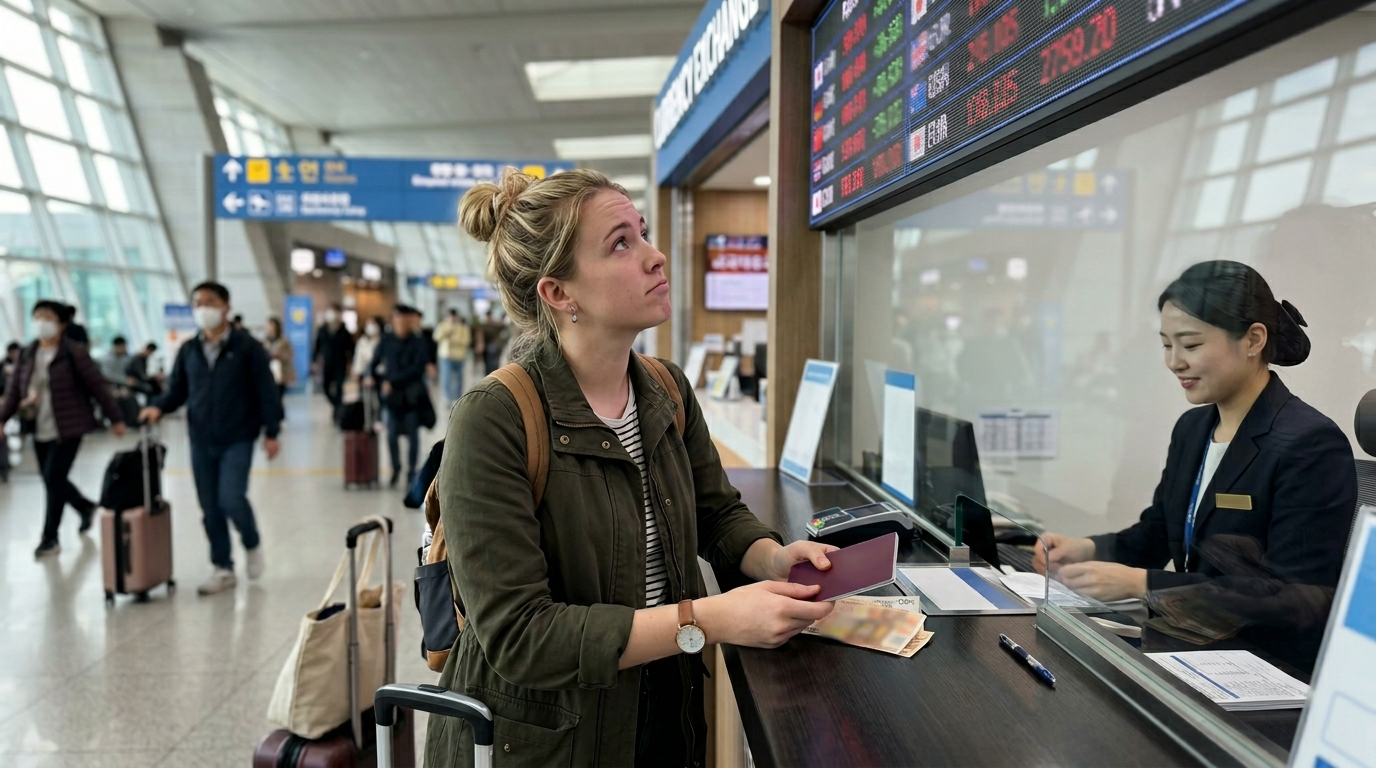
One of the most common — and costly — mistakes travellers make is exchanging currency at the airport. Those bright, convenient booths are strategically placed to catch you at your most vulnerable: jet-lagged, in a hurry, and unfamiliar with local prices. The result? Exchange rates that can be 10–15% worse than what you'd get elsewhere. This guide breaks down every option so you can keep more of your travel money where it belongs — in your pocket.
Why Airport Exchange Rates Are So Poor
Airport currency exchange operators pay premium rents for their prime locations and know that travellers have limited alternatives once they've passed through security. Their business model relies on:
As a rule of thumb, avoid exchanging more than a small emergency amount at airport booths — just enough to cover a taxi or first meal if absolutely necessary.
Use our [currency converter](/currency) to check the mid-market rate before you travel, so you know exactly what a fair exchange looks like.
The Best Options for Getting Foreign Currency
1. ATMs at Your Destination (Usually the Best Option)
Withdrawing cash from a local ATM at your destination is almost always the most cost-effective method. Here's why:
Key tips for ATM withdrawals abroad:
2. No-Fee Travel Cards and Accounts
Specialist travel accounts have transformed how savvy travellers manage money abroad. Cards from providers like Wise, Revolut, and Starling offer:
These cards are now the gold standard for frequent travellers. Load them before you leave home and use them for both card payments and ATM withdrawals.
3. Your Home Bank's Foreign Currency Service
Many high-street banks offer foreign currency ordering services, either in-branch or online for home delivery. Rates are generally better than airport booths but worse than ATMs or travel cards.
When this makes sense:
Order at least 5–7 days before departure to allow for delivery or branch processing.
4. Local Banks at Your Destination
Once you arrive, local banks often offer competitive rates — sometimes better than your home bank's foreign currency service. Look for:
Bring your passport as ID, as most banks require it for currency exchange transactions.
5. Licensed Currency Exchange Bureaux (Not at Airports)
In city centres, licensed exchange bureaux can offer competitive rates, particularly in major financial hubs like London, Bangkok, or Dubai. The key is comparison:
Browse more articles on our [blog](/blog) for destination-specific money tips.
What to Avoid: Common Currency Exchange Traps
Dynamic Currency Conversion (DCC)
When paying by card abroad, you may be asked: "Would you like to pay in [your home currency] or [local currency]?" Always choose local currency. DCC lets the merchant's bank set the exchange rate, which is typically 3–7% worse than your card's rate.
Hotel Currency Exchange
Hotels that offer currency exchange are almost always offering poor rates. It's a convenience service, not a competitive one. Use it only in genuine emergencies.
Traveller's Cheques
Once the gold standard of travel money, traveller's cheques are now largely obsolete. Few businesses accept them, banks charge fees to cash them, and the exchange rates are poor. Skip them entirely.
Prepaid Cards from Travel Agents
Some travel agents sell prepaid currency cards with rates locked in at purchase. While these offer certainty, the rates are often worse than specialist travel cards, and fees for reloading or withdrawing can add up.
Building Your Travel Money Strategy
The smartest approach combines multiple methods:
Check live weather on our [city dashboard](/) to plan your itinerary — knowing whether you'll be in beach towns or major cities helps you estimate how much cash you'll actually need.
Quick Reference: Exchange Rate Rankings (Best to Worst)
With a little preparation, you can save hundreds of pounds, dollars, or euros on every trip. The difference between the best and worst exchange options on a two-week holiday can easily exceed £200 — money far better spent on experiences than fees.