How to Split Costs and Manage Finances Smartly on Group Travel Trips
Group travel is more fun but financially complex — here's how to split costs fairly, avoid awkward money moments, and keep everyone happy on the road.
# How to Split Costs and Manage Finances Smartly on Group Travel Trips
Travelling with friends or family is one of life's great pleasures — shared experiences, split costs, and memories made together. But group travel also introduces a layer of financial complexity that can, if poorly managed, create tension and awkwardness. From splitting accommodation costs to handling different spending habits, managing money on a group trip requires some planning and the right tools. Here's everything you need to know to keep the finances smooth and the friendships intact.
Setting Expectations Before You Go
The most important financial conversation happens before anyone books a flight. Getting everyone aligned on budget expectations early prevents the most common source of group travel friction — the mismatch between what different people are comfortable spending.
Have an honest budget conversation with all group members as early as possible. Establish a rough daily budget per person covering accommodation, food, activities, and transport. Be specific: "around £100 per day" is more useful than "mid-range."
Discuss the big-ticket items first:
Establishing these parameters early means no one feels pressured into spending beyond their comfort zone, and no one feels held back by others' budget constraints. Use our [currency converter](/currency) to help everyone understand costs in their home currency before committing.
Choosing the Right Money-Splitting Method
There are several approaches to splitting group travel costs, each with its own advantages depending on your group's size and dynamics.
The Equal Split Approach
The simplest method: all shared costs are divided equally among the group. This works well when everyone has similar spending habits and the group is doing most things together. The downside is that it can feel unfair if some people eat more, drink more, or participate in more activities than others.
Best for: Small groups of close friends with similar budgets and travel styles.
The Itemised Approach
Everyone pays only for what they personally consume or use. This is the fairest method in theory but the most administratively complex in practice — tracking who had what at every restaurant and activity quickly becomes exhausting.
Best for: Groups with significantly different spending habits or budgets, or for specific high-cost items like activities.
The Group Kitty
Everyone contributes an agreed amount to a shared pot at the start of the trip (or periodically throughout). Shared expenses — accommodation, group meals, transport — are paid from the kitty. Any surplus is divided equally at the end; any shortfall is topped up.
This method works particularly well for all-inclusive or package-style trips where most costs are shared. Designate one person as the kitty keeper, and keep a simple running total.
Best for: Longer trips where most expenses are shared, or groups that prefer not to track every individual transaction.
The Rotating Payer Method
Group members take turns paying for shared expenses — one person covers dinner, the next covers the museum tickets, and so on. Over the course of a trip, costs roughly equalise. This works best for groups where trust is high and the amounts involved are broadly similar.
Best for: Small groups of close friends on shorter trips.
Essential Apps for Group Money Management
Technology has made splitting group travel costs dramatically easier. Several apps are specifically designed for this purpose:
Splitwise is the most widely used group expense tracker. Add expenses as you go, assign who paid and who owes what, and the app calculates the most efficient way to settle up at the end. It handles multiple currencies automatically, making it ideal for international travel.
Tricount is a popular European alternative with a clean interface and strong multi-currency support. It generates a clear summary of who owes whom at the end of the trip.
Settle Up offers similar functionality with the added ability to track expenses in real time and send payment reminders.
Whichever app you choose, the key is consistency — everyone needs to log expenses as they happen rather than trying to reconstruct them at the end of the trip. Browse more articles on our [blog](/blog) for more travel finance tips.
Managing Different Currencies in a Group
International group travel adds the complexity of foreign currency. Here are the key strategies for managing this smoothly:
Designate a currency manager: On trips involving multiple currencies, it helps to have one person responsible for exchanging money and keeping track of the current exchange rate. This prevents the group from making multiple small exchanges at poor rates.
Use a multi-currency card: Several fintech providers offer cards that hold multiple currencies simultaneously, allowing you to switch between them at interbank rates. Cards from providers like Wise, Revolut, or Starling are popular choices for international travellers.
Agree on a reference currency: For the purposes of the expense-splitting app, agree on a single reference currency (usually everyone's home currency or the destination's local currency) to avoid confusion.
Keep receipts: In countries where receipts aren't automatically provided, make a habit of asking for them. This makes expense tracking much easier and provides a paper trail if disputes arise.
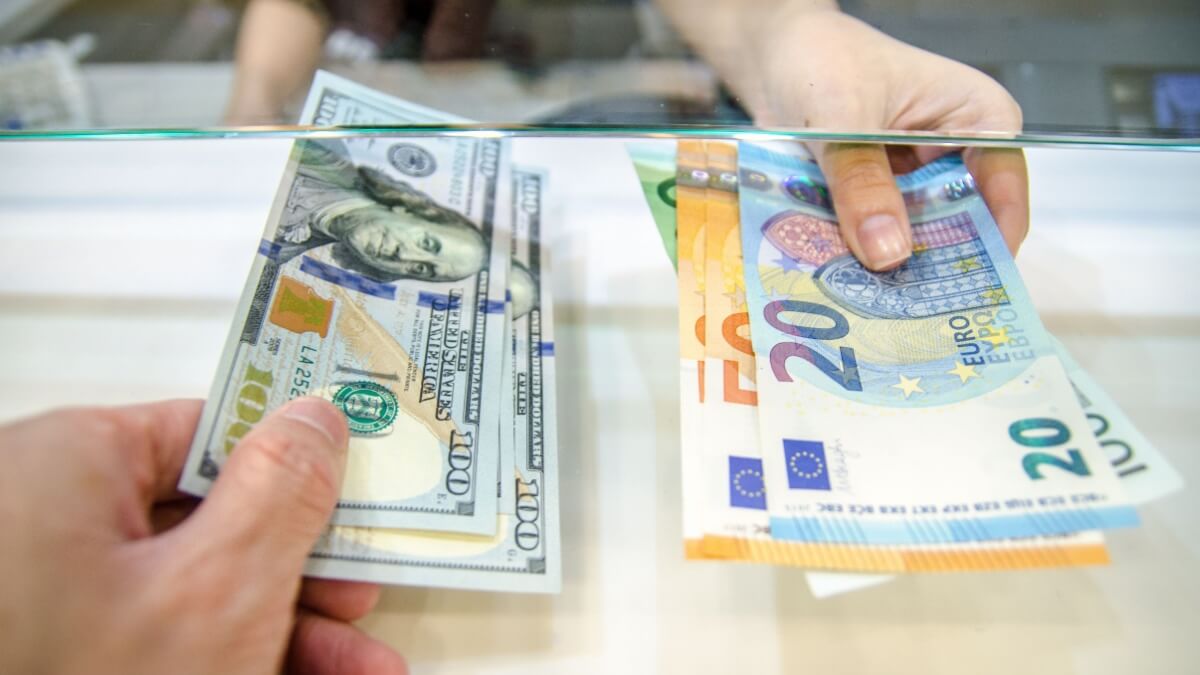
Currency Exchange Tips for Groups
Handling Awkward Money Situations
Even with the best planning, awkward money moments can arise. Here's how to handle the most common ones:
The slow payer: If someone consistently delays settling their share, address it directly but kindly. Suggest settling up more frequently — daily or every two days — rather than leaving it all to the end of the trip.
The big spender: If one group member consistently wants to upgrade to more expensive options, establish a clear policy: upgrades are paid individually, not split equally.
The budget-conscious traveller: If one person is on a tighter budget, be sensitive. Suggest free or low-cost alternatives for some activities, and avoid making them feel pressured to participate in expensive options.
Unexpected costs: Build a 10-15% buffer into your group budget for unexpected expenses — entrance fees that weren't anticipated, transport delays, or a spontaneous experience that everyone wants to do.
Settling Up: The Final Reckoning
At the end of the trip, use your expense-tracking app to generate a final settlement summary. Most apps will calculate the minimum number of transactions needed to settle all debts — this is usually fewer transactions than you'd expect.
Settle up promptly after returning home, while the trip is fresh in everyone's minds. International bank transfers, PayPal, or payment apps like Venmo or Monzo make this straightforward regardless of where group members are based.
Keep a record of the final settlement for at least a few weeks after the trip, in case any questions arise. Check live weather on our [city dashboard](/) to start planning your next group adventure — because once you've mastered the finances, group travel becomes one of the most rewarding ways to explore the world.
With the right preparation, tools, and communication, managing group travel finances doesn't have to be stressful. A little organisation before and during the trip means everyone can focus on what really matters: enjoying the experience together.